At first sight, the Code Connect events were low on anything comment-worthy. For UI5, the news can be summed up as: UI5 2.0 is dead — sorry: on ice — with nothing new for Web Components or Fiori Elements. Furthermore, the Fiori infrastructure running at customer sites — such as FLP and Build Work Zone — continues to be largely ignored at UI5con. For CAP, the news is that the team continues to be silent on delivering on earlier announcements: there was no customer keynote, nothing about major LoB apps from SAP using CAP, and no news regarding open-sourcing CAP. In this regard, CAP remains true to itself—undeterred in its focus on its own core team and on events that target SAP employees and partners.
The content of the keynotes met expectations. Looking closer, however, there is still some news that might have gone unnoticed. Its impact on the SAP world is tremendous—real game-changers, at least.
Game changer
An easily missed, “Easter egg” style statement appeared at the very beginning of the event, conveying a breathtaking message. During the introduction, the livestream and recording displayed general event information, including the number of speakers, sponsors, and on-site participants, which totaled 400.
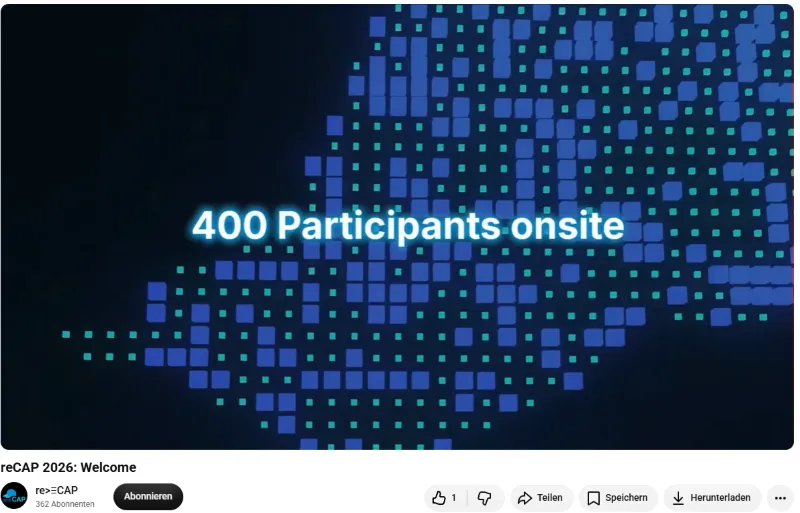
And, the number of people watching online.
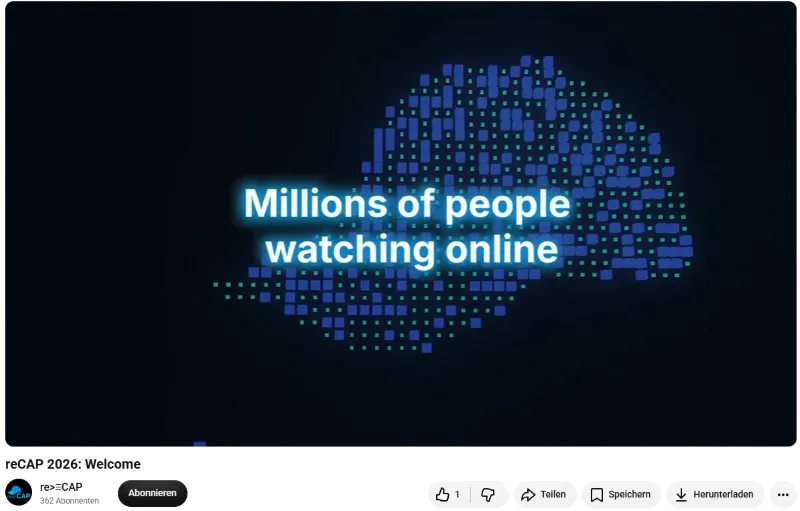
“Millions of people watching online.” Let that sink in. This explains why the CAP team continues to use the SAP Broadcasting tool. Hosting millions of live viewers is a massive challenge for YouTube. Managing an audience of this scale requires a highly professional tool, even if it means that an ordinary viewer cannot see the live count, unlike on a YouTube livestream. The trade-off for being able to serve a live stream to millions is cutting public reporting on current live viewer numbers. Note that the phrase is are watching. Millions of people are watching. It does not say “available to millions.” CAP is not referring to the possibility of millions accessing the recording later - which applies to anyone with internet access -, whether they tune in live or watch the recording years from now.
What does millions actually mean? In the context of SAP it means: there are 2.5 to 5 million ABAP developers, and SAP serves around 440,000 customers. This would imply that a significant share of all SAP professionals around the world tuned into the livestream. However, reaching such numbers is virtually impossible if the focus remains solely on the traditional SAP world. Therefore, the conclusion is clear: CAP has made it. It has evolved into one of the go-to frameworks for Java and JavaScript developers worldwide — and for developers in general, regardless of their technology stack, yes: world-wide. To put these millions into perspective 🔗: AWS re_event draws over 400,000 online attendees. Microsoft Build and Ignite reach between 200,000 and 350,000. Apple WWDC has 20,000,000+ viewers. Goolge I/O gets regularly millions of views 🔗. This means the CAP event attracted more live viewers than SAP’s own flagship Sapphire event 🔗 (or the recording. though perhaps millions did watch it live).
BTP is used to run millions of CAP apps
This news is a game-changer. Consider that non-SAP and non-BTP customers cannot even run a CAP app in production. Millions watching does not necessarily imply that all those viewers are developers or customers. But then again, why watch if they aren’t?
The conclusion is inescapable: CAP has made it, and BTP has made it. Congratulations, SAP.
But what does this actually mean? Does it imply millions of SAP customers are now on BTP? One can’t help but look for the press releases and investor announcements regarding newly signed BTP contracts. Millions of people using CAP to develop software on BTP should theoretically have a massive impact on BTP usage, costs, maintenance, and return on investment. Considering that millions of CAP applications are supposedly running productively on BTP, the controversial license restrictions introduced last year suddenly make perfect sense.
Maybe
Millions watching online should naturally mean that the view counts on the event videos are sky-high. Yet, the actual view numbers seem a little low, don’t they? But then again—if absolutely everyone already watched the sessions live, it makes perfect sense that the view count on the recording isn’t hitting 10,000+.
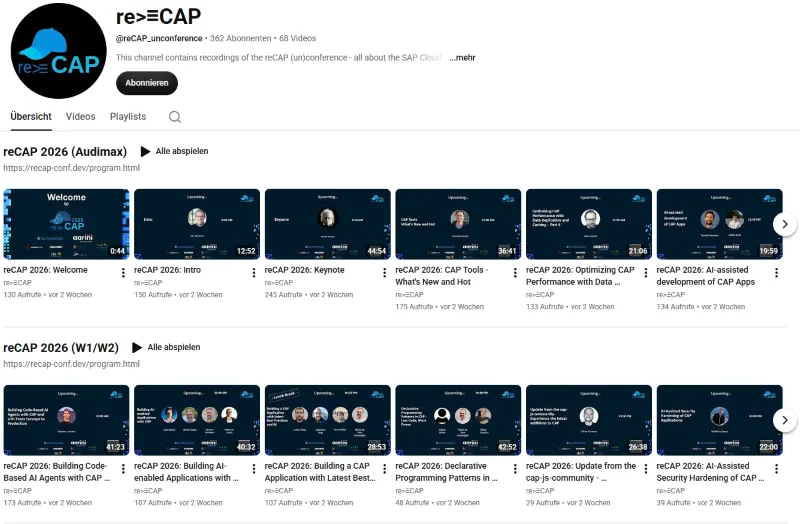
Another possibility is marketing gone haywire, where exaggerating 400 live participants to “almost a thousand” is one thing, but claiming “millions” is a different issue altogether. Questioning if this is just optimism or outright lying — aka fake news — is moot, however, since reCAP is an official SAP event (“This conference organized by SAP”)[source 🔗]. SAP and lying? That can easily be ruled out. Imagine if it weren’t so: customer tickets marked as solved when the problem actually still exists? Promising product features and never delivering them? No, that simply does not happen at SAP.
Conclusion
Use CAP. Do not even think about an alternative. Millions are using it. Everyone in the SAP world is using it. Everyone outside the SAP world is using it. Millions watched reCAP 2026 live. Millions! Next year it will be billions, at least! Try to get a ticket for reCAP 2027 as fast as possible. When only 400 people can join on-site while millions watch online … every single person who managed to sign up for the on-site event is a very, very lucky person indeed.
Exaggeration is fine, but please, try to keep it within reasonable boundaries. Especially when there is absolutely no need for it. Instead, deliver on earlier announcements: open-source CAP, bring SAP’s own LoB applications to the keynote, and let an actual customer take the stage. Let the product speak for itself.
Forget that last paragraph. This would mean that millions isn’t accurate. Impossible. After all, we are talking about SAP here!
Context
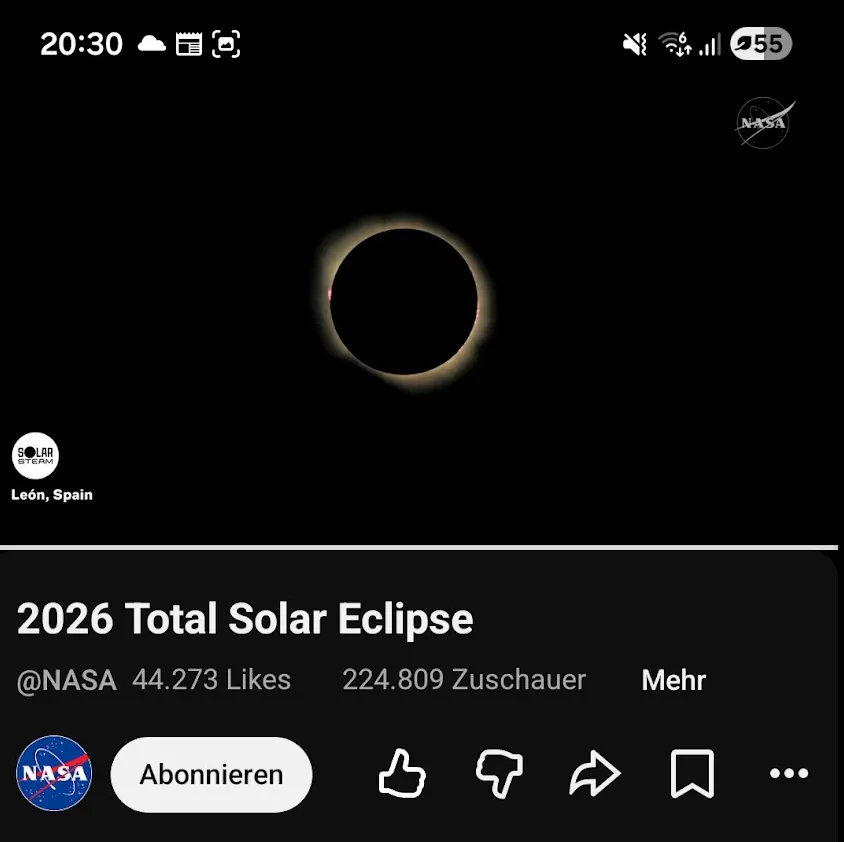
To put millions in context: in Europe, there was an Eclipse, August 12 🔗. NASA live-streamed the event. 225k live viewers during the total eclipse. You might think: OK, it is just NASA, a bunch of losers. To give them credits, they might have hit over one million in total audience. Still less than the millions from reCAP event.