

“It’s 106 miles to Chicago, we got a full tank of gas, half a pack of cigarettes, it’s dark and we’re wearing sunglasses”
Through a tweet from the SAP Community I came to read a blog from SAP’s Chief Learning Officer 🔗 Max Wessel 🔗. In the blog he lays out three approaches that he thinks are a good approach to learning. Actually, they are the low hanging fruits that could have been harvested years ago. Put the training where the people are, offer jump start tutorials and keep going. Sounds easy, yet you have to remember: YouTube videos are nice, but only if they complement another training offering. Just by watching, you don’t learn 🔗. Google does not forget so fast, and old learning content isn’t helping.
What I am missing is the comparison against a benchmark. Currently it is a marketing fused blog. Talking with SAP customers about how they learn SAP technologies, with another SAP employee, some academic anecdotes. The will to offer the best is not shining through the text. What is the vision? Hands on is king and being able to transform learning content directly into a proof of concept or MVP, is even better. The option to deep dive into a topic where needed. That’s the kind of vision I am missing. SAP is listening is not a vision.
I regularly attend SAP and non-SAP events and more importantly, different learning offerings. My preferred one is Microsoft Learn. How Microsoft approaches learning is an eye opener. I have experienced first-hand how learning and upskilling can be. Like Jake Blues, I have seen the light 🔗. Once you have seen the light, you are on a mission from god 🔗. That motivation, that drive to deliver the best for the ecosystem, at least I don’t see it.
Max blog contains a line that can help understand why SAP learning is as it is.
“As Chief Learning Officer at SAP, I have two responsibilities. First, future-proof our workforce during a period of rapid technological change. And second, enable our ecosystem to go through the same transformation and get the most out of our products and services.”
First priority is to ensure that SAP employees can upskill. Second comes the ecosystem. If you put your ecosystem second, you do have a problem. SAP’s ecosystem is basically all SAP, just without SAP employees. That is a huge, gigantic amount of people that work on a daily basis at SAP customers. These people influence daily how SAP is used and perceived in the market. There are many SAP people out there that still code old 90’s style ABAP code, that work on old releases, that had their last training years ago. An important part in learning is the person. SAP makes it too easy for everyone to not learn. Cost, format, offering, format, everything can be used as an excuse to not learn SAP. The thinking that it is OK to participated in the last training 10 years ago is getting the new normal. That is a problem for SAP, for the ecosystem, actually, for everyone that is working with SAP software. I don’t know if SAP understands the risk this implies to their future.
When it comes to learning and ensuring that the ecosystem is skilled, SAP is like Bob’s country bunker with exactly two choices 🔗: high training costs AND is hard to access. In my opinion, SAP needs to ensure that their workforce as well as everybody else gets the same access to learning. No prio 1 or 2. It must be the same priority. This needs to be just like the task for the SAP CTO. Ensure that SAP employees and the ecosystem have access to the tools needed to deliver the best solutions. Imaging the CTO providing ADT only to SAP employees or having RAP, CAP, Fiori Tools or BTP services exclusively to SAP employees? Regarding learning, an SAP employee has access to Learning Hub, can easily use BTP or other SAP software to create a lab without having to think about costs or restrictions. For everybody else, access is limited by costs. While a company can give all their employees access to Learning Hub, they still have to buy it. Trying out SAP software can get very costly too (do we see a free BTP tier in 2021?). Learning SAP, and with learn I do not mean the basic hello world examples and tutorials, is costly. Yes, with BTP free trial and other offerings like NetWeaver developer edition it is getting better. The samples on GitHub 🔗 are super helpful. The TechEd LH offering was great. Was, as in: it is a thing of the past and if you missed it: bad luck. The statement that a learning offer is available may be semantically correct, but compared to what might be possible, it is also just an excuse 🔗.
Microsoft goes as far as offering an integrated access to Azure in their learning material. Example: learn Kubernetes 🔗. All you need is a Microsoft account and you get for free a sandbox environment to try out Kubernetes on Azure. Seamless integrated into the learning material. The BTP boosters in the discovery center should be enhanced to offer the same experience.
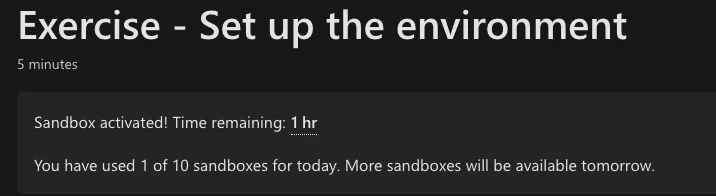
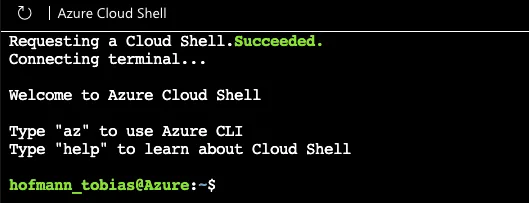
For AWS you can find similar learning offerings 🔗. Not as good as Microsoft Learn, but close enough. This is accessible learning: free, online, guided, hands on. SAP discovery center gets close to this, but still is partly limited to an S-User or SAP wants you to talk to AGS. That’s like when you buy an overpriced piano, and the seller tells you that it’s a good deal because you get the black keys for free 🔗. (to some learning offerings, best is to quote Jake Blues after Ray said above reference)
Having Microsoft – in my opinion – setting the benchmark, let’s try to figure out why Microsoft was able to achieve this. I looked at their chief learning officer 🔗 and found this:
“As the first Chief Learning Officer at Microsoft Germany I lead a team dedicated to the skilling strategy for our employees and our customers, partners, and future generations.”
This takes everyone to the same level. No priority first and second. Employees, customers, partners and future combined together with an and. Yes, it reads similar on Max LinkedIn profile:
“SAP Learning’s mission of creating opportunity for the more than 440,000 customers, the more than 3 million developers and partners in our ecosystem, and the more than 100,000 employees”
You can see the focus lies on opportunity and numbers. You don’t write this when your mission is to skill people. Dear SAP: the future of the entire SAP ecosystem and SAP depends on skilled people. Do not prioritize, do not see learning as a sales opportunity. Make it as easy as possible to learn. That is a vision I’d like to hear from SAP. Don’t treat your ecosystem as a second priority.